Japanese Online Newsletter は弊社 が運営 するBloguru でもご覧 いただけるのをご存知 でしょうか?
今日 は2020年 のニュースレターで最 もブログアクセスの多 かった2020年 5月 19日 の投稿 をご紹介 したいと思 います。
来週 は2021年 のトップ1を発表 します。皆 さんはどのニュースレターが一番 お好 きでしたか?
Did you know that the Japanese Online newsletter also publishes on our Bloguru blog?
Today, we’d like to announce the most viewed Japanese Online newsletter from 2020, which was originally published on May 19th, 2020.
Next week, we’ll present the most viewed newsletter from 2021. Do you want to take a guess?
お辞儀 (おじぎ・ojigi)
あいさつの仕方 は国 によって様々 です。握手 をするところもあれば、ハグやキスを交 わすところもあり、また場面 によってもかわります。
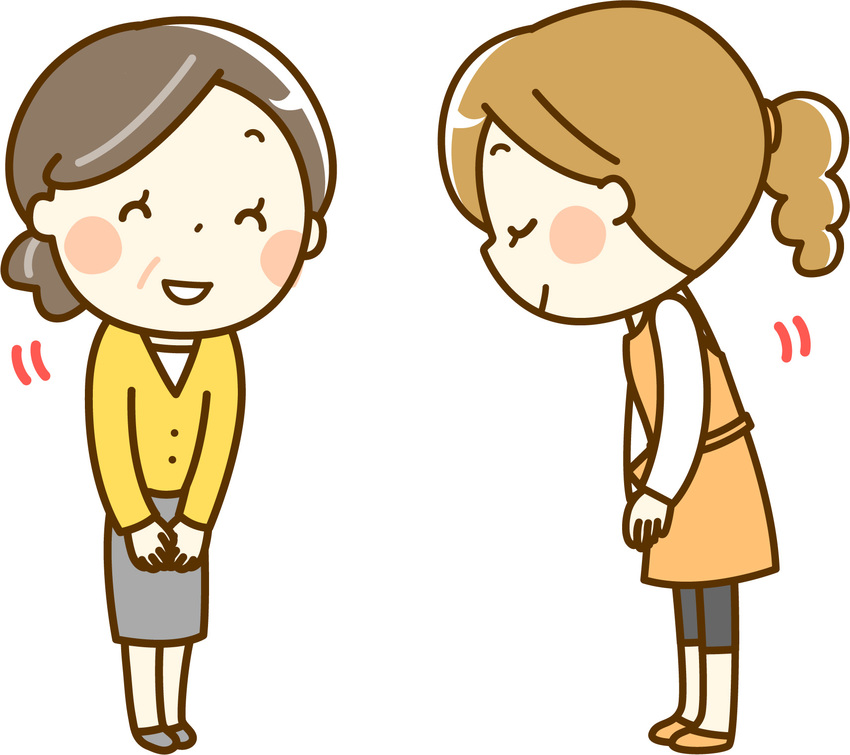
日本 のあいさつではお辞儀 をします。お辞儀 は、相手 への敬意 や、その時 の気持 ちを丁寧 にあらわす表現 方法 です。
では、どのような時 にお辞儀 がつかわれるのでしょうか?
はじめて会 う人 に「こんにちは。はじめまして。」とあいさつをするとき
感謝 の気持 ちをこめて「ありがとうございました」とつたえるとき
「もうしわけございません」とあやまるとき
お店 やレストラン、ホテルなどでお客様 を「いらっしゃいませ」とおもてなしするとき
スポーツの試合 前 に「よろしくおねがいします」、試合 後 に「ありがとうございました」と、おたがいの健闘 をいのるとき
このほかにも、道 をわたるとき、車 や自転 車 が止 まってくれたときに、かるく頭 をさげてお礼 をすることもあります。
あいさつやお礼 をするときに、ぜひお辞儀 をしてみてください。日本語 を話 さなくても、あなたの気持 ちがきっと伝 わります。
Bowing
The way people greet each other varies depending on where you live. Some shake hands, others hug and kiss on the cheek. The method of greeting can also vary depending on the situation.
Bowing is the way that Japanese people often use to greet and communicate with each other. It shows respect to the other, and presents a polite attitude.
Below are some situations when Japanese people bow.
Meeting new people, as a way of saying “Hello. Nice to meet you.”
Saying “Thank you” with gratitude
Apologizing, as a way of saying “I’m sorry.”
Welcoming customers/guests to places like stores, restaurants, and hotels as a way of saying “Welcome. May I help you?”
At sporting events- before and after a game, the players bow to each other to wish them the best of luck
Besides the situations above, when a vehicle or cyclist stops for someone at an intersection, some people nod their head.
When greeting someone or saying thank you, try bowing sometime. Even if you are not speaking Japanese, you are still able to convey how you feel by bowing.
sign up for the Japanese-Online Newsletter
__..-・**・-..__..-・**・-.._ あいうえお かきくけこ さしすせそ たちつてと なにぬねの はひふへほ まみむめも やいゆえよ らりるれろ わゐうゑを ん __..-・**・-..__..-・**・-.._
#JapaneseOnline #LearningJapanese #FreeJapaneseLessons #JapaneseVideoLearning #JapaneseAnime #Anime #JapaneseFood #Bloguru
Did you know that the Japanese Online newsletter also publishes on our Bloguru blog?
Today, we’d like to announce the most viewed Japanese Online newsletter from 2020, which was originally published on May 19th, 2020.
Next week, we’ll present the most viewed newsletter from 2021. Do you want to take a guess?
お辞儀 (おじぎ・ojigi)
あいさつの
では、どのような
はじめて
「もうしわけございません」とあやまるとき
お
スポーツの
このほかにも、
あいさつやお
Bowing
The way people greet each other varies depending on where you live. Some shake hands, others hug and kiss on the cheek. The method of greeting can also vary depending on the situation.
Bowing is the way that Japanese people often use to greet and communicate with each other. It shows respect to the other, and presents a polite attitude.
Below are some situations when Japanese people bow.
Meeting new people, as a way of saying “Hello. Nice to meet you.”
Saying “Thank you” with gratitude
Apologizing, as a way of saying “I’m sorry.”
Welcoming customers/guests to places like stores, restaurants, and hotels as a way of saying “Welcome. May I help you?”
At sporting events- before and after a game, the players bow to each other to wish them the best of luck
Besides the situations above, when a vehicle or cyclist stops for someone at an intersection, some people nod their head.
When greeting someone or saying thank you, try bowing sometime. Even if you are not speaking Japanese, you are still able to convey how you feel by bowing.
sign up for the Japanese-Online Newsletter
__..-・**・-..__..-・**・-.._ あいうえお かきくけこ さしすせそ たちつてと なにぬねの はひふへほ まみむめも やいゆえよ らりるれろ わゐうゑを ん __..-・**・-..__..-・**・-.._
#JapaneseOnline #LearningJapanese #FreeJapaneseLessons #JapaneseVideoLearning #JapaneseAnime #Anime #JapaneseFood #Bloguru