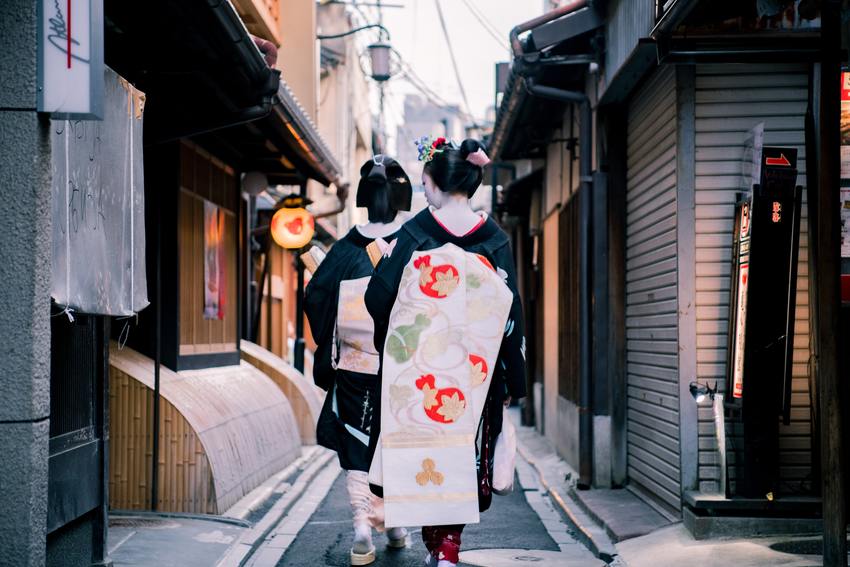
デートやプロポーズに断 られるという意味 で使 われる「振 られる Furareru 」という言葉 があります。例 えば、「僕 は___さんが好 きだと告白 したが、彼女 に冷 たく振 られてしまった。」という風 に使 います。「振 られる」とは、一般的 に物 が前後 左右 に反復 して動 く事 を意味 しますが、なぜ拒否 を意味 する言葉 になったのでしょうか。
日本 では、着物 は女性 が着 るものですが、未婚者 と既婚者 で違 いがあるのをご存 じですか。未婚者 は袖 の長 い着物 を、既婚者 は袖 の短 い着物 を着 るのです。なので着物 を見 るだけで女性 が未婚 か既婚 か分 かります。この長 い袖 の着物 を振 り袖 と言 います。
さて、話 を「振 られる」に戻 します。男性 が未婚 の女性 にアプローチした際 、女性 が興味 を持 っていれば長 い着物 の袖 を左右 に振 り、そうでない場合 は袖 を前後 に振 っていたそうです。つまり、「振 られる」とは袖 を前後 に振 るという動作 から来 ているのです。
ちなみに未婚者 が長 い袖 の着物 を着 ることは今 でもそうなのですが、袖 を振 って返事 をする習慣 はもう残 っていないと思 います。また、ここでは男性 が女性 を振 るという習慣 はなかったように見 えますね。
There is a word called "Furareru" which means to be turned down for a date or to be turned down for a marriage proposal. For example, "I confessed that I like ______-san, but she coldly rejected me." The word "Furareru" generally means that things move repetitively from side to side, back and forth, but why did "Furareru" become a word that means refusal?
In Japan, a kimono is worn by women, but did you know that unmarried and married women wear different kimonos? Unmarried people wear kimonos with long sleeves, while married people wear kimonos with short sleeves. So you can tell if a woman is unmarried or married just by looking at her kimono. A kimono with long sleeves is called a Furisode.
Now let's go back to "being rejected." When a man approaches an unmarried woman, if she is interested, she would wave the sleeves of her long kimono from side to side. If the woman was not interested, she would wave her kimono sleeves back and forth. So, the word "rejected" comes from the action of waving sleeves back and forth.
Incidentally, unmarried people still wear long-sleeved kimonos, but I don't think the custom of replying by waving one's sleeves is still in existence. Also, it looks like there was no custom of men waving to women in Japan.
sign up for the Japanese-Online Newsletter
__..-・**・-..__..-・**・-.._ あいうえお かきくけこ さしすせそ たちつてと なにぬねの はひふへほ まみむめも やいゆえよ らりるれろ わゐうゑを ん __..-・**・-..__..-・**・-.._
Japanese-Online offers a complete Japanese video course
only $14/month!
Learn more at Japanese-Online.com
__..-・**・-..__..-・**・-.._ あいうえお かきくけこ さしすせそ たちつてと なにぬねの はひふへほ まみむめも やいゆえよ らりるれろ わゐうゑを ん __..-・**・-..__..-・**・-.._
#JapaneseOnline #LearningJapanese #FreeJapaneseLessons #JapaneseVideoLearning #JapaneseAnime #Anime #JapaneseFood #Bloguru
さて、
ちなみに
Furareru
There is a word called "Furareru" which means to be turned down for a date or to be turned down for a marriage proposal. For example, "I confessed that I like ______-san, but she coldly rejected me." The word "Furareru" generally means that things move repetitively from side to side, back and forth, but why did "Furareru" become a word that means refusal?
In Japan, a kimono is worn by women, but did you know that unmarried and married women wear different kimonos? Unmarried people wear kimonos with long sleeves, while married people wear kimonos with short sleeves. So you can tell if a woman is unmarried or married just by looking at her kimono. A kimono with long sleeves is called a Furisode.
Now let's go back to "being rejected." When a man approaches an unmarried woman, if she is interested, she would wave the sleeves of her long kimono from side to side. If the woman was not interested, she would wave her kimono sleeves back and forth. So, the word "rejected" comes from the action of waving sleeves back and forth.
Incidentally, unmarried people still wear long-sleeved kimonos, but I don't think the custom of replying by waving one's sleeves is still in existence. Also, it looks like there was no custom of men waving to women in Japan.
sign up for the Japanese-Online Newsletter
__..-・**・-..__..-・**・-.._ あいうえお かきくけこ さしすせそ たちつてと なにぬねの はひふへほ まみむめも やいゆえよ らりるれろ わゐうゑを ん __..-・**・-..__..-・**・-.._
Japanese-Online offers a complete Japanese video course
only $14/month!
Learn more at Japanese-Online.com
__..-・**・-..__..-・**・-.._ あいうえお かきくけこ さしすせそ たちつてと なにぬねの はひふへほ まみむめも やいゆえよ らりるれろ わゐうゑを ん __..-・**・-..__..-・**・-.._
#JapaneseOnline #LearningJapanese #FreeJapaneseLessons #JapaneseVideoLearning #JapaneseAnime #Anime #JapaneseFood #Bloguru